

Why Single Origin Coffee Tastes Better: A 2026 Guide
Table of Contents
- What Makes Single Origin Coffee Taste Different?
- How to Tell if Coffee Beans Are Fresh
- Single Origin vs Blend Coffee: Which Wins?
- Coffee Flavor Profiles by Region: A World Tour
- The Role of Terroir and Processing in Flavor
- Is Single Origin Coffee Always Better? Debunking the Myth
- How to Brew Single Origin Coffee for Best Results
- Frequently Asked Questions
Last Updated: September 29, 2026
What Makes Single Origin Coffee Taste Different?
Single origin coffee tastes different because every bag traces back to one place, one harvest, and often one processing method. That traceability preserves the flavors created by soil, altitude, and climate instead of blending them into a uniform cup.

The flavors you notice come from three things working together:
- Varietal: the plant's genetic character, which sets the ceiling on flavor
- Terroir: soil, altitude, and climate, which shape acidity and body
- Processing: how the cherry becomes a dried bean, which decides how much fruit or chocolate shows up
How to Tell if Coffee Beans Are Fresh
Fresh coffee beans show four signals: a printed roast date, a one-way degassing valve, visible oils on darker roasts, and a strong aroma when you open the bag. A "best by" date tells you nothing about when it was roasted.
Here is what to check before you buy:
- Roast date printed, not just a best-by date
- One-way valve on the bag to release carbon dioxide
- Whole beans rather than pre-ground
- Aroma that smells sweet and lively, not flat or papery
- Oils visible on medium-dark and dark roasts
Specialty Coffee Association freshness guidance
Single Origin vs Blend Coffee: Which Wins?
Neither wins outright. Single origin coffee wins on character and traceability. Blends win on consistency, balance, and value, and they are the better choice for espresso and everyday drip.
| Factor | Single Origin | Blend |
|---|---|---|
| Flavor goal | Distinct, place-specific | Balanced, repeatable |
| Consistency | Varies by harvest | Stable year-round |
| Best brewing use | Pour-over, drip, AeroPress | Espresso, milk drinks |
| Traceability | Farm or cooperative level | Regional or unspecified |
| Price | Usually higher | Usually lower |
| Best for | Exploring flavor | Daily routine |
Coffee Flavor Profiles by Region: A World Tour
Coffee flavor profiles by region follow a rough pattern: African coffees lean floral and fruit-forward, Latin American coffees bright and balanced, and Indonesian coffees earthy and heavy-bodied. Altitude, varietal, and processing bend that pattern.
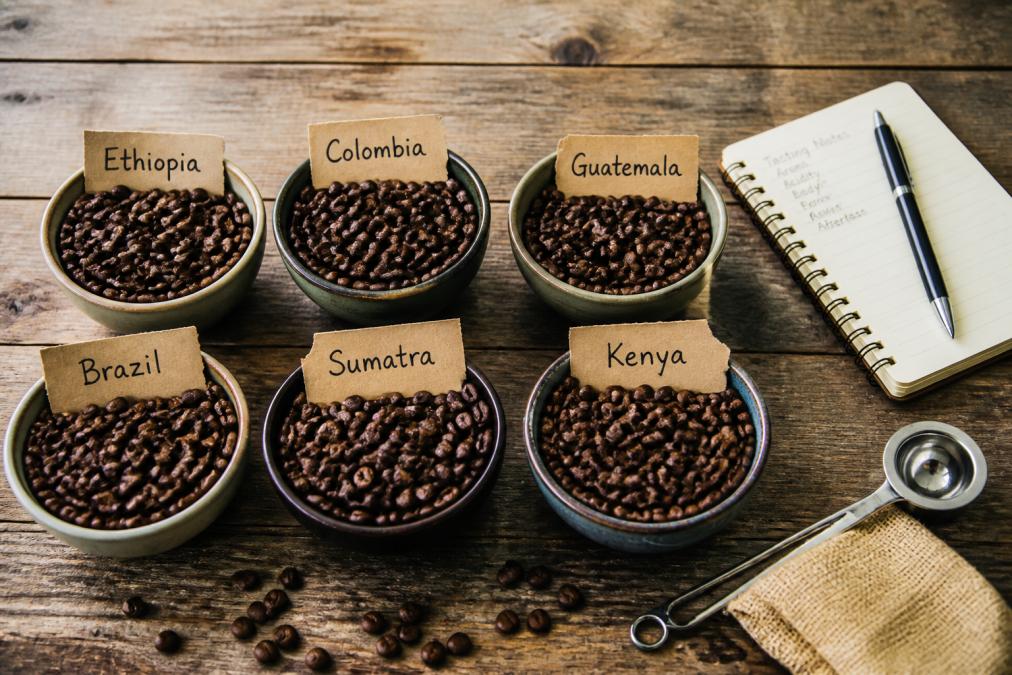
Ethiopia: Floral and Fruit-Forward
Ethiopian coffees are the reference point for fruit-forward coffee. Grown at high altitude from indigenous heirloom cultivars, they show berry, stone fruit, and floral notes no other region replicates, and natural processing amplifies that fruit.
Ethiopia coffee origin research
Colombia: Bright and Balanced
Colombian coffees are the reliable middle: washed processing and volcanic soil produce dried orange, berry, and chocolate notes with clean acidity and a smooth finish. If you want a single origin that pleases almost everyone, start here.
Sumatra: Earthy and Syrupy
Sumatran coffees break every rule of "bright and clean." The traditional wet-hulling process, Giling Basah, leaves the bean with low acidity and a thick, syrupy body, plus dark chocolate, dried fruit, and an earthy depth no washed coffee delivers. It is the single origin for people who think they don't like single origins.
The Role of Terroir and Processing in Flavor
Terroir sets the ceiling on what a coffee can taste like; processing decides how much of that ceiling you reach. Two lots from the same farm, picked the same day and processed differently, can taste like entirely different coffees, the core reason single origin coffee tastes different from a blend.
Terroir: The Variables That Set Flavor Potential
Terroir is not a single factor. It is a stack of measurable growing conditions:
Single Origin Favorites Sample Pack →
- Altitude: Higher-grown beans develop more slowly because cooler temperatures delay cherry maturation, concentrating sugars and organic acids. Prized lots commonly come from above 1,500 meters; coffees below 1,200 meters often taste flatter.
- Soil composition: Volcanic soils, common in Latin America and Indonesia, tend to be rich in phosphorus and potassium, which support aromatic development. The minerals do not transfer directly to flavor, but they shape how the plant ripens.
- Temperature swing: A wide gap between daytime highs and nighttime lows forces the plant to metabolize sugars differently. Regions with that swing, high-altitude Ethiopia, parts of Colombia, produce more complex acidity.
- Rainfall and shade: Consistent moisture and shade slow ripening further, which is why shade-grown coffees often show more layered flavor than sun-grown lots.
Processing: Where Flavor Gets Locked In or Lost
Processing is the step between cherry and dried bean, and it is the most controllable variable in the chain. The three main methods produce predictably different cups:
- Washed process: The fruit is removed before drying, producing a clean, structured cup with clear acidity and a transparent expression of terroir. Washed coffees are the reference point for tasting origin character because the process adds little of its own flavor.
- Natural process: Cherries are dried whole, with the fruit still attached. The bean absorbs sugars and fruit compounds from the mucilage, producing a fruit-forward, sweet, heavy-bodied cup that amplifies berry and stone-fruit notes.
- Honey process: Some mucilage is left on during drying, sitting between washed and natural. The amount left on, yellow, red, or black honey, determines how much fruit sweetness carries into the cup. A red honey often shows a syrupy body and a clear stone-fruit note without a natural's fermented edge.
Why This Matters for the Single Origin Argument
When a roaster blends, they combine lots to hit a target flavor, often smoothing out the very terroir and processing signatures that make a single origin distinctive. A single origin keeps those signatures intact, which is the mechanism behind the difference you taste. To taste it directly, compare a washed Ethiopia and a natural Ethiopia side by side.
Is Single Origin Coffee Always Better? Debunking the Myth
No. Single origin coffee is not always better, and treating it as a quality tier is the most common mistake in coffee buying. Origin tells you about character, not quality. A well-crafted blend can beat a mediocre single origin every time, and for some palates and brewing methods, a blend is the better choice.
The Science of Why You Perceive Single Origin as 'Better'
Part of the reason single origin coffee gets a reputation for superiority is not in the cup, it is in your nervous system. Flavor perception is constructed: your brain combines taste, smell, texture, temperature, and expectation into one experience.
- Expectation and confirmation bias: When you are told a coffee is rare, small-lot, or from a specific farm, your brain primes itself to notice complexity. Sensory science shows labeling affects perceived quality, the same wine or coffee scores higher when described as premium. That does not make the coffee bad; it means your evaluation is not neutral.
- Temperature and time: Coffee tastes sweeter and more complex as it cools, because volatile aromatic compounds become more perceptible and bitterness is less masked. A single origin tasted across a range of temperatures shows more layers than the same coffee drunk quickly while hot.
- Sensory contrast: Your perception of a flavor depends on what you tasted immediately before. A single origin's distinctive acidity or fruit note stands out more after a bland or familiar cup. In a blend, those contrasts are smoothed out by design, which is why blends feel 'comfortable' and single origins feel 'complex.'
When a Blend Is Actually the Better Choice
A blend is not a compromise. It is a deliberate tool. There are specific situations where a blend outperforms a single origin:
- Espresso and milk drinks: Blends are built for balance and body, which is why most espresso recipes use them. A single origin espresso can be excellent but is less forgiving, a bright Ethiopian natural can taste sour or thin in a milk drink where a blend tastes sweet and full.
- Daily consistency: A blend recipe can be adjusted when one crop changes, so your morning cup tastes the same in March as in October. A single origin cannot promise that, because the coffee changes with each harvest.
- Value and volume: Blends let roasters use high-quality lots that do not quite stand alone as single origins, keeping the price lower without dropping the grade.
- Palates that prefer balance over distinctiveness: If you want a cup that tastes smooth and familiar rather than surprising, a blend is the better match. That is not a lesser preference, it is a different one.
The Honest Framework
Ask three questions before you buy:
- What do you want from the cup? Distinctiveness and a sense of place point to single origin. Balance and repeatability point to a blend.
- How will you brew it? Pour-over, drip, and AeroPress reward single origin clarity. Espresso and milk drinks reward blend structure.
- How fresh is it? A blend roasted last week beats a single origin roasted six months ago, every time. Freshness outranks origin as a quality variable.
There is also the roast-fit variable: a light roast on a coffee built for dark roasting wastes the bean, regardless of origin. And bad extraction ruins a great lot faster than a mediocre one. Origin is one variable among several, not the top of the hierarchy.
How to Brew Single Origin Coffee for Best Results
Brew single origin coffee with a method that preserves clarity: pour-over, drip, or AeroPress, at a ratio near 1:16 coffee to water, with water just off a boil. Fruity African lots reward lighter, faster brews; earthy Sumatran lots reward slower, fuller extractions.
Match the method to the bean:
- Floral, fruit-forward lots: pour-over or AeroPress, medium grind, slightly cooler water
- Bright, balanced lots: drip or pour-over, medium grind, standard ratio
- Earthy, heavy-bodied lots: French press or espresso, coarse or fine grind, longer contact
Frequently Asked Questions
Are single origin coffees objectively better than blends?
No. Single origin coffee offers traceability and distinct flavor profiles tied to a specific region, which many coffee lovers prefer. Blends, however, are crafted for consistency and balance, often at a lower price point. A well-made blend can taste just as good as a single origin, depending on your preference for complexity versus consistency.
How can I tell if my coffee beans are fresh?
Check the roast date on the bag, not the best-by date. Fresh beans are typically roasted within the last two to four weeks. Look for a strong aroma when you open the bag. If the beans smell flat or taste stale, they are past their prime.
What does 'terroir' mean in the context of coffee?
Terroir refers to the environmental factors where coffee is grown, including altitude, soil type, climate, and farming practices. These conditions influence how the bean develops its flavor. For example, high-altitude Ethiopian coffees often show floral and fruity notes, while Sumatran coffees from lower elevations tend to be earthy and syrupy.
Does single origin coffee always have a higher caffeine content?
No. Caffeine content depends on the coffee variety, roast level, and brewing method, not whether it is single origin. A light roast single origin and a dark roast blend can have similar caffeine levels. If you are sensitive to caffeine, focus on brew strength and serving size rather than origin.