

How to Tell if Coffee Beans Are Fresh: 7 Checks
Table of Contents
- Why Freshness Matters More Than the Expiration Date
- The Coffee Bloom Test: Your First Freshness Check
- Coffee Roast Date Importance vs. Best-By Labels
- Sensory Checks: Aroma, Visual Inspection, and Taste
- How to Store Coffee Beans for Maximum Freshness
- Roast Levels and the Freezing Debate
- Common Mistakes That Ruin Fresh Coffee
- Conclusion: Make Freshness a Daily Habit
- Frequently Asked Questions
Last Updated: September 6, 2026
Why Freshness Matters More Than the Expiration Date
Coffee freshness is the single biggest factor separating a memorable cup from a flat one. When you learn how to tell if coffee beans are fresh, you gain control over flavor in a way no brewing gadget can match. The problem is that most people rely on the "best by" date, which tells you almost nothing about how to tell if coffee beans are fresh.
At MineYourBusinessCoffee, we roast every order specifically for the customer, so we know the difference between a roast date and a warehouse stocking date. A bag can sit in a distribution center for months yet still carry a reasonable best-by date. The real clock starts ticking at the roast.
Roasted coffee is porous and begins losing the volatile compounds responsible for aroma and flavor almost immediately after it cools. Oxidation sets in, oils migrate to the surface, and the delicate chemistry that makes coffee exciting degrades day by day. Understanding this process is the foundation for every freshness check that follows.
The Coffee Bloom Test: Your First Freshness Check
The coffee bloom test is the most reliable visual indicator of freshness available to home brewers, but understanding why it works makes the test far more useful. When hot water first hits freshly ground coffee, trapped carbon dioxide escapes rapidly, causing the grounds to swell and bubble into a dramatic, puffy crust. Fresh beans produce a vigorous bloom; stale beans barely react at all.
During roasting, heat produces carbon dioxide gas, which a bean can hold up to 10 times its own volume in at the moment it leaves the roaster. That gas escapes gradually: roughly half is released within the first 24 hours, and the flow slows considerably after day 5. By day 14, most beans have released 70 to 80 percent of their remaining gas, which is why bloom vigor drops off after the two-week mark.
Here is how to run the test properly:
- Grind your beans just before brewing, using a consistent grind size
- Place the grounds in your brewer and pour twice their weight in hot water, around 200°F
- Watch for 30 to 45 seconds as the grounds expand and release gas
- A strong, even bloom that rises at least a quarter inch indicates beans roasted within the past two weeks
- A weak or absent bloom suggests the beans have lost most of their carbon dioxide
Roast level changes what to expect. Light roasts are denser and hold gas longer, so they can still bloom respectably at three weeks. Dark roasts have a more porous structure that releases gas quickly; a 10-day-old dark roast may bloom less dramatically than a light roast roasted yesterday. This is not a defect, it is faster degassing.
Grind size also matters. Finer grinds release gas faster, producing a more vigorous but shorter-lived bloom; coarser grinds create a longer but gentler rise. Keep your grind size consistent between batches so you are comparing like for like.
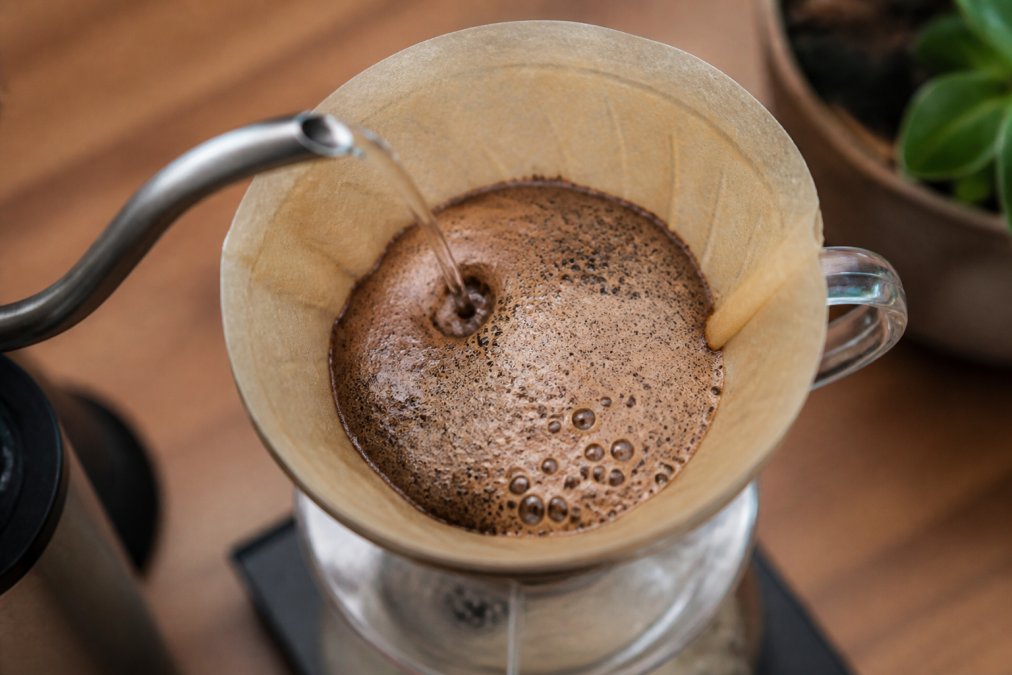
The National Coffee Association's brewing guidance explains that allowing coffee to bloom properly improves extraction and overall flavor quality. The bloom is not just a freshness indicator, it is also a functional step. When CO2 is present in the grounds, it creates a barrier that resists water absorption. Skipping the bloom means water cannot saturate the grounds evenly, leading to under-extraction in some areas and over-extraction in others. A proper bloom ensures even saturation and a more balanced cup.
For a quantitative check, weigh your grounds before and after the bloom. Fresh beans absorb roughly twice their weight in water during the bloom. If they only absorb 1.2 to 1.5 times their weight, the beans have lost significant gas and are likely past their peak.
Coffee Roast Date Importance vs. Best-By Labels
Coffee roast date importance cannot be overstated, yet most commercial bags hide this information or omit it entirely. A roast date tells you when the beans left the roaster, the true starting point for the freshness window. Best-by labels are conservative manufacturer estimates that often allow for months of shelf life that do not reflect optimal flavor.
Fresh coffee peaks between roughly 4 and 14 days after roasting. In the first few days, beans still release large amounts of CO2, which can interfere with extraction. After about two weeks, aromatic compounds fade noticeably, and by the one-month mark, most delicate flavors have diminished.
When shopping, turn the bag over and look for a roast date. If you cannot find one, treat that as a warning sign. Reputable roasters want you to know when it was roasted because freshness is their competitive advantage.
Sensory Checks: Aroma, Visual Inspection, and Taste
Beyond the bloom test, your senses provide reliable tools for evaluating bean freshness. These checks work best together, since each catches a different stage of staleness. But there is a critical distinction most guides miss: stale coffee and poorly roasted coffee can present similar symptoms, and confusing the two leads to wasted money.
Aroma and Fragrance Analysis
Fresh coffee beans carry a bold, complex fragrance that fills the room when you open the bag. Grind a small handful and smell immediately: you should detect fruity, floral, nutty, or chocolatey notes. Stale beans smell flat, dusty, or slightly cardboard-like.
Sensory calibration takes practice, and the best way to build it is through structured comparison. Here is a simple exercise for beginners:
- Buy two bags from the same roaster: one freshly roasted (within 7 days) and one that is clearly past its prime (6 weeks or older)
- Grind both to the same consistency and place them in separate bowls
- Smell each one alternately, waiting 30 seconds between sniffs to reset your olfactory receptors
- Write down three adjectives for each, do not worry about being "correct," just capture what you perceive
- Brew both as identical pour-overs and taste them side by side
The goal is not to identify specific tasting notes but to recognize the structural difference between fresh and stale: fresh coffee has a bright, forward aroma that hits you immediately, while stale coffee smells hollow. Once you have experienced that contrast a few times, you will recognize staleness instantly.
Distinguishing Stale from Poorly Roasted
A poorly roasted bean, one baked too slowly or under-developed, can taste flat, papery, and one-dimensional, mimicking staleness. The difference matters because no storage method will fix a bad roast.
Here is how to tell them apart:
- Aroma: Stale beans smell dusty or like old cardboard. Poorly roasted beans often smell bready, grassy, or like baked vegetables, flavors that come from incomplete chemical development during roasting
- Acidity: Stale coffee loses its acidity entirely, tasting flat and hollow. Poorly roasted coffee often has a sharp, sour, or astringent quality that is unpleasant but distinctly present
- Mouthfeel: Stale coffee feels thin and watery. Poorly roasted coffee can feel heavy or slimy on the tongue, a texture that comes from under-developed sugars rather than age
- Finish: Stale coffee leaves almost no aftertaste. Poorly roasted coffee leaves a lingering, unpleasant bitterness that coats the back of the throat
If your beans smell bready or grassy rather than dusty, the problem is likely the roast, not the age. A reputable roaster will often replace a bag that tastes baked or under-developed, but they cannot help you with beans that are simply old.
Visual Inspection of Beans and Oily Residue
Fresh beans have a matte or slightly satin finish, with a uniform color appropriate to their roast level. A light roast should look dry and brown, while a dark roast develops a subtle sheen as oils migrate to the surface.
Heavy oily residue is a double-edged signal. Some oil on dark roasts is normal, but excessive oiliness on a light or medium roast often indicates aging. A slick, greasy appearance on beans that should look dry is a red flag, as are cracked, dull, or unevenly colored beans.
Roast level changes what to expect visually. A light roast that looks oily is almost certainly old, light roasts are dense enough that oils should not reach the surface for weeks. A dark roast may show a light sheen within days, which is not a defect. Do not reject a dark roast for surface oil; compare it to what you know about that roast profile.
Taste Profiles of Stale vs. Fresh Coffee
The ultimate test happens in the cup. Fresh coffee delivers clean, bright acidity with distinct flavor notes and a pleasant finish. Stale coffee tastes papery, hollow, or flat, with a one-dimensional bitterness.
Brew a small cup and pay attention to mouthfeel. Fresh coffee often has a syrupy or velvety texture, while stale coffee feels thin and watery. If your coffee tastes like nothing, or worse, like old cardboard, the beans are past their prime regardless of what the package claims.
How to Store Coffee Beans for Maximum Freshness
Learning how to store coffee beans for maximum freshness is just as important as buying them fresh. Even excellent beans degrade quickly if stored improperly.
Store whole beans in an airtight container that blocks light and heat, or keep them in their original bag if it has a one-way valve. The valve releases carbon dioxide while preventing oxygen from entering and accelerating oxidation.
Keep the container in a cool, dark cabinet away from heat sources. Do not store coffee in the refrigerator, where moisture and food odors will compromise it. Grind only what you need immediately before brewing, since ground coffee loses freshness far faster than whole beans.
Roast Levels and the Freezing Debate
Roast level significantly influences how quickly beans lose freshness. Light roasts retain volatile compounds longer because their denser structure slows degassing and oxidation. Dark roasts, with their porous structure and surface oils, go stale faster and show visible signs of aging sooner.
Freezing coffee beans is a legitimate preservation strategy, but only under specific conditions. Freeze beans in airtight, portion-sized containers, and remove only what you need for the next few days. Never refreeze beans once thawed, as the temperature change causes moisture condensation that damages the bean structure. The Specialty Coffee Association's storage research has examined how temperature and moisture affect coffee quality over extended periods.
For everyday drinking, freezing is unnecessary if you buy beans you will use within two to three weeks. Freezing makes sense for rare or expensive beans you want to enjoy over several months.
Common Mistakes That Ruin Fresh Coffee
Several habits quietly destroy coffee freshness. The most common mistake is buying pre-ground coffee, which loses its aromatic compounds within minutes of grinding. Whole beans kept intact until brewing preserve their flavors dramatically longer.
Another frequent error is storing coffee in a transparent container on the counter. Light exposure accelerates the breakdown of volatile compounds, and the visual appeal of a glass jar comes at the cost of faster staleness. Keeping coffee near the stove or above a warm appliance also speeds up oxidation.
Buying more coffee than you can use within a few weeks is another trap. A large bag at a discount price loses its value if half of it goes stale before you finish it. Food and Drug Administration guidance on food storage emphasizes that proper storage conditions help maintain quality and safety for all food products, coffee included.
Conclusion: Make Freshness a Daily Habit
Checking freshness should become second nature. Look for a roast date before you buy, run the bloom test when you brew, and trust your senses when something tastes off. These habits take seconds but deliver consistently better coffee every day.
Most commercial coffee never gives you a chance to experience true freshness because the supply chain works against it. At MineYourBusinessCoffee, we roast beans specifically for each order, so your coffee arrives within days of leaving the roaster, not months. Our custom labeling options also make it easy to share fresh coffee as gifts.
If you are tired of dull, lifeless coffee that tastes like an afterthought, try coffee that is roasted when you order it. Get started with MineYourBusinessCoffee and taste the difference that genuine freshness makes in your morning cup.
Frequently Asked Questions
Do coffee beans expire or just lose flavor?
Coffee beans don't spoil in a way that makes you sick, but they do go stale. The volatile compounds that create aroma and flavor oxidize over time, leaving a flat, papery, or hollow taste. A best-by date indicates peak quality, not safety. For the best cup, focus on the roast date and use the beans within 2 to 4 weeks of that date, depending on the roast level.
Are 2-year-old coffee beans still good?
Two-year-old beans are safe to drink but will taste noticeably stale. After that long, the oils have oxidized, creating a rancid or cardboard-like flavor with almost no bloom. You can brew them, but you will miss the complex flavors of fresh coffee. Use the coffee bloom test and aroma checks to confirm they have lost their vibrancy before brewing a full batch.
What is the coffee bloom test?
The coffee bloom test measures how much carbon dioxide the beans release when hot water first hits them. Freshly roasted coffee degasses for days after roasting, so it blooms vigorously, bubbling and expanding. Stale beans have already released most of their gas, so they barely react. A flat bloom means the beans are old, while a lively bloom indicates they are fresh and ready to brew.
How long does coffee stay fresh after it's ground?
Ground coffee loses its freshness much faster than whole beans because grinding exposes more surface area to oxygen. Ground coffee starts to go stale within 15 to 30 minutes. For the best flavor, grind your beans right before brewing. If you must buy pre-ground coffee, use an airtight container and consume it within a week of opening.
What matters most: Fresh coffee is defined by its roast date, not its best-by label. Check for a visible roast date, run the bloom test, trust your nose and eyes, and store beans properly in an airtight container away from light and heat. These simple habits will transform your daily brew from mediocre to memorable.