

Single Origin Coffee vs Coffee Blends: 2026 Guide
Table of Contents
- Single Origin Coffee vs Coffee Blends: The Core Difference
- What Defines a Single Origin Coffee
- What Defines a Coffee Blend
- Flavor Profiles: Terroir, Acidity, and Body
- Coffee Roast Profiles Explained
- How to Tell If Coffee Beans Are Fresh
- Best Brewing Methods for Single Origin Coffee
- Price, Consistency, and Value Compared
- Which One Should You Choose?
- Frequently Asked Questions
Last Updated: September 25, 2026
Single Origin Coffee vs Coffee Blends: The Core Difference
The central difference between single origin coffee and coffee blends comes down to traceability versus consistency. Single origin coffee comes from one specific place, one harvest, one producer group. A blend combines beans from multiple origins to create a repeatable flavor profile. This guide from MineYourBusinessCoffee breaks down how each choice affects your cup.

That distinction sounds academic until you taste it side by side. One cup shifts with the season, rainfall, and processing method at a single farm.
What Defines a Single Origin Coffee
Single origin coffee is coffee sourced from one geographic region, one country, or sometimes one single farm or cooperative within that region. The term covers a spectrum: a country-level label like Colombia, a regional micro-lot from Sidama in Ethiopia, or a single-estate coffee from one grower.
What Defines a Coffee Blend
A coffee blend combines beans from two or more origins, roasted together to hit a target flavor profile. The roaster's goal is balance and repeatability, not the expression of one place.
Flavor Profiles: Terroir, Acidity, and Body
Terroir, the combination of soil, altitude, and climate where coffee grows, shapes how a single origin tastes. Volcanic loam at high elevation tends to produce brighter acidity and more complexity. Lower-altitude clay soils often yield softer, sweeter cups.
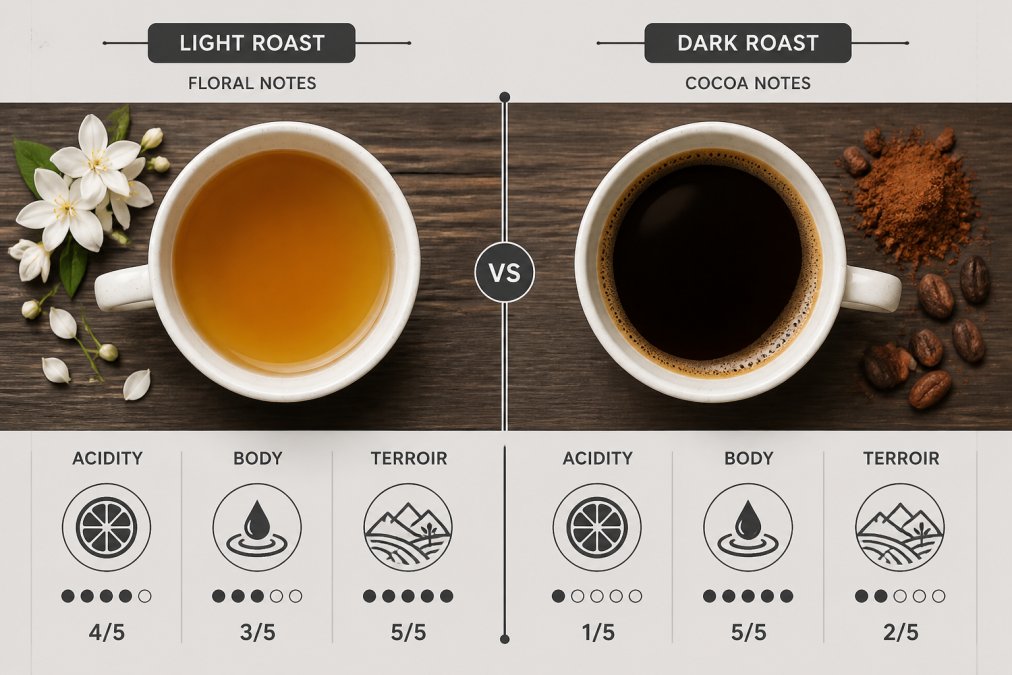
Compare two single origins and the range becomes obvious:
- A washed Ethiopian coffee from the Sidama zone, grown at 1,700 to 1,900 meters, typically shows milk chocolate, fruity, and caramel notes with a full natural process.
- A wet-hulled Sumatra from Aceh, Takengon delivers a syrupy body with dark chocolate, dried fruit, and earthy depth.
Coffee Roast Profiles Explained
Coffee roast profiles are the time and temperature curves a roaster applies to green beans, and they determine how much acidity, body, and sweetness survive to the cup. Light roasts preserve origin character; dark roasts emphasize caramelization and body. Roast level matters more for single origin than for blends, and the reason is chemistry, not preference.
Two reactions drive almost everything you taste:
- Maillard reaction: amino acids and reducing sugars react as bean temperature climbs past roughly 300°F, generating hundreds of aroma and flavor compounds. This is where bread crust, cocoa, and roasted nut notes form.
- Caramelization and pyrolysis: sugars brown and eventually carbonize at higher temperatures. Push too far and you trade origin-specific acids and esters for generic roast bitterness.
Roasters track three milestones per batch:
- Charge temperature, the drum temperature when green beans drop in, typically 380-420°F on a drum roaster.
- First crack, audible popping around 385-400°F bean temperature, when moisture and CO2 escape and the bean becomes drinkable. Most specialty coffee is dropped somewhere between first crack and the onset of second crack.
- Development time ratio, the percentage of total roast time spent after first crack. A common target is 20-25%. Too short and the coffee tastes grassy or underdeveloped; too long and you mute acidity and flatten sweetness.
Typical ranges and what they do to a cup:
- Light to medium-light (drop just after first crack): brighter acidity, floral and fruit-forward, lighter body. Preserves the organic acids, citric, malic, tartaric, that carry origin character.
- Medium (drop mid-development): balanced, sweetness and origin character both present. The most forgiving target for a wide range of beans.
- Medium-dark to dark (approaching or past second crack): heavier body, lower acidity, chocolate and caramel dominance. Origin nuance gives way to roast-driven flavor.
How to Tell If Coffee Beans Are Fresh
Freshness is the biggest variable you control after you buy. To tell if coffee beans are fresh, check the roast date on the bag, look for visible oil on darker roasts, and smell the beans: fresh coffee releases a strong aroma when the bag opens. A "best by" date tells you almost nothing.
A practical freshness checklist:
- Roast date printed on the bag, not just a best-by date
- Beans arrive within two to three weeks of roasting for peak flavor
- Whole beans, not pre-ground, unless you brew immediately
- Bag has a one-way degassing valve
- Beans smell sweet and aromatic, not flat or papery
Best Brewing Methods for Single Origin Coffee
The best brewing methods for single origin coffee are pour-over, AeroPress, and drip, because they let you control extraction and highlight the origin's distinct notes. Single origins reward precision; blends tolerate a wider margin.
Two variables decide most of the outcome:
| Variable | Starting Point | What It Changes |
|---|---|---|
| Water-to-coffee ratio | 1:15 to 1:17 | Strength and body |
| Water temperature | 195-205°F | Extraction speed and bitterness |
| Grind size | Medium-fine for pour-over | Flow rate and contact time |
| Brew time | 2:30-4:00 minutes | Total dissolved solids |
Price, Consistency, and Value Compared
Single origins usually cost more per pound than blends, and the gap comes from scarcity and supply-chain structure, not marketing. A micro-lot from one farm is a limited quantity, often a few hundred pounds, and the roaster pays a premium to secure it. A blend absorbs price swings across several origins, buying Brazilian natural process when the Colombian washed crop runs expensive and swapping components without changing the target cup.
| Factor | Single Origin | Blend |
|---|---|---|
| Traceability | High: region, farm, process | Low to moderate |
| Flavor consistency | Varies by harvest | Highly repeatable |
| Price per bag | $22.99 | $22.00-$22.99 |
| Best for | Exploring flavor | Daily reliability |
| Risk | You may dislike a specific lot | Rarely surprises |
What that means for buying:
- Buy single origin in smaller quantities, more often. A 12-ounce bag consumed within three to four weeks of the roast date will taste meaningfully better than the same coffee at week eight.
- Blends tolerate a longer shelf life. If you brew one cup a day and a bag lasts you six weeks, a blend is the lower-risk purchase.
- Store both the same way: opaque, airtight, room temperature, away from the grinder. The freezer works for long-term storage only if you portion first and never thaw-and-refreeze.
Which One Should You Choose?
Choose single origin if you want to taste place, enjoy brightness and complexity, and don't mind a cup that changes with the harvest. Choose a blend for the same reliable cup every morning, especially when brewing for a group with mixed preferences.
Frequently Asked Questions
What is the primary difference between single origin coffee and coffee blends?
Single origin coffee comes from one specific region, farm, or cooperative, so it reflects the terroir and processing method of that place. Coffee blends combine beans from multiple origins to create a consistent, balanced flavor profile. Neither is inherently better; single origin highlights distinctiveness, while blends prioritize reliability and complexity through careful composition.
Does single origin coffee always taste better than a blend?
No. Single origin coffee showcases unique flavor notes like citrus or floral aromatics, but blends can deliver richer body and more consistent balance. A well-crafted blend like the 6 Bean Blend combines six specialty-grade beans for layered dark chocolate, caramelized sugar, and roasted hazelnut notes. The better choice depends on whether you value distinctiveness or everyday consistency in your cup.
How can I tell if coffee beans are fresh?
Check the roast date on the bag, not just the best-by date. Fresh beans smell sweet and aromatic, feel firm, and produce a audible crackle when brewed. Beans roasted within two weeks taste best. MineYourBusinessCoffee roasts fresh beans specifically for each order to ensure quality and consistency.
What are the best brewing methods for single origin coffee?
Pour-over and AeroPress highlight the delicate acidity and floral notes of single origin coffees like the Uganda Light Roast. Drip brewing works well for medium roasts such as Colombia or Mexico. French press suits heavier single origins like Sumatra. Match your brew method to the roast level and flavor profile you want to emphasize.
Why do roasters create coffee blends?
Roasters blend beans to achieve consistency year-round, balance acidity and body, and create complex flavor profiles that single origins cannot replicate alone. Blends also let roasters manage cost and availability when a specific crop changes. A good blend like Cowboy Blend delivers bold cocoa and caramel notes regardless of seasonal harvest variations.
What should I look for on a label to identify single origin coffee?
Look for a specific country, region, or farm name such as Ethiopia Sidama, Colombia Medellín, or Sumatra Aceh. The label should list the processing method (washed, natural) and often the altitude and varietal. If the bag only says '100% Arabica' or 'house blend' without a specific origin, it is likely a blend.
Most coffee programs fail for the same reason: the beans were roasted months before anyone brewed them. MineYourBusinessCoffee roasts fresh for each order, offers single origins and blends side by side so you can compare honestly, and adds custom labels for gifts, events, and office orders. Members of the Founders Club get a lifetime discount and free shipping. Get started with MineYourBusinessCoffee and give your team a cup worth waking up for.