

Is Artisan Coffee Worth the Price in 2026
Table of Contents
- What Makes Artisan Coffee Different from Regular Coffee
- Why Is Specialty Coffee So Expensive
- Fresh Roasted Coffee Benefits: Flavor, Aroma, and Consistency
- Cost Breakdown: Is Artisan Coffee Worth the Price
- Best Price on Coffee: Who Benefits Most from Artisan Options
- How to Test Quality Before Committing to Artisan Coffee
- Frequently Asked Questions
Last Updated: October 11, 2026
What Makes Artisan Coffee Different from Regular Coffee
Is artisan coffee worth the price? The answer depends on what you value in your morning cup. The difference between artisan and regular coffee goes far deeper than marketing.
Sourcing and Traceability
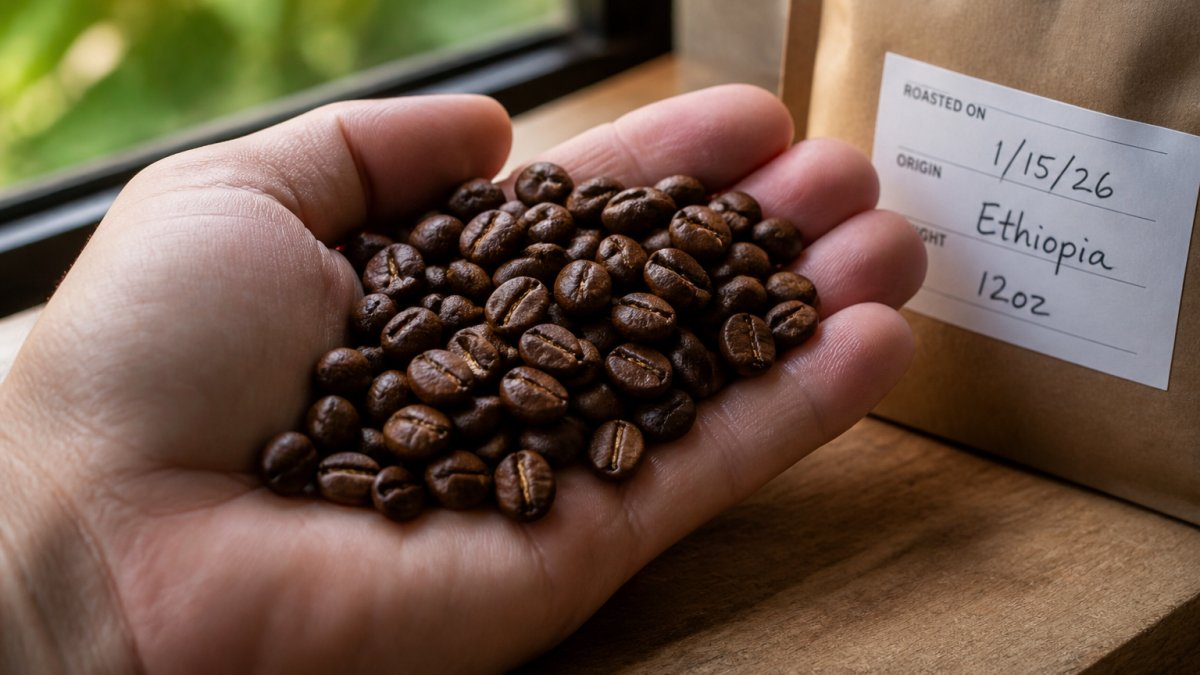
Artisan coffee sources single-origin beans from specific farms with direct grower relationships. Regular grocery-store coffee blends beans from multiple origins and harvest years, often sitting in storage for months before roasting.
Freshness and consistency suffer when beans age. Artisan roasters print roast dates on bags and often roast to order, so beans arrive days after roasting. Supermarket coffee may be six months old with no date visible.
Roasting Methods and Freshness
Large commercial roasters use high-speed industrial drums for volume. Artisan roasters use smaller equipment allowing precise control over temperature curves and roast profiles.
This precision matters. Artisan medium roasts develop nuanced flavors with brighter aromatics, cleaner clarity, and balanced body. Mass-produced roasts often taste flat from rushed or aggressive roasting.
Fresh-roasted coffee shipped quickly tastes as intended. Grocery-store coffee tastes muted because flavor-carrying volatile compounds oxidize over weeks or months.
Why Is Specialty Coffee So Expensive
Specialty coffee costs more at every production step. Single-origin beans from specific microclimates, hand-sorting, selective processing, and small-batch roasting all require more labor and skill than commodity production.
Artisan roasters roast to order with faster shipping, costing more than warehousing coffee for months. You're paying for beans that haven't degraded.
The price difference reflects real production differences. Specialty coffee from known origins roasted with documented care requires more resources than blended commodity beans.
Fresh Roasted Coffee Benefits: Flavor, Aroma, and Consistency
Fresh-roasted coffee shows immediate benefits. A fresh medium roast has distinct tasting notes like caramel and citrus. The same beans roasted months ago taste flat or bitter as oxidation flattens flavor compounds.
Fresh coffee smells vibrant; stale coffee smells dull. Aromatic compounds degrade predictably after roasting.
Artisan coffee offers consistency. The same single-origin bean from the same roaster tastes consistent month to month. Commodity blends vary because they're blended from whatever's available and cheap that week.
Cost Breakdown: Is Artisan Coffee Worth the Price
Price Per Pound and Per Cup: The Full Picture
Artisan single-origin coffee costs around $22.99 per pound versus $8-12 for grocery-store coffee. The per-pound comparison is incomplete.
Cost-per-cup calculation:
Artisan Coffee ($22.99/lb): $1.44 base + $0.44 shipping + $0.07 waste = ~$1.95 per cup
Grocery-Store Coffee ($10/lb): $0.63 base + $0.03 waste = ~$0.66 per cup
Real difference: roughly $1.29 per cup, or about 3x the price.
This gap narrows or widens depending on three variables:
1. Brewing Method Efficiency
Brewing method affects extraction and dose:
- Pour-over and drip: Extract 18-22%; both coffees perform similarly.
- French press: Extracts 20-30%. Artisan coffee's cleaner profile means you may use less to avoid over-extraction.
- Espresso: Extracts 25-30%. Artisan coffee's consistency reduces waste from failed shots; grocery-store espresso often produces sour or bitter shots that get dumped.
- Cold brew: Extracts 16-20%; both types perform similarly.
2. Freshness Decay and Storage
Coffee flavor peaks 5-14 days after roasting. Artisan coffee (3-7 days old on arrival) stays peak for 2-3 weeks. Grocery-store coffee (often 2-6 months old) has already declined 30-50%.
3. Subscription and Bulk Discounts
Subscriptions reduce artisan cost to ~$1.66 per cup. Bulk buying (3 lbs) with reduced shipping brings per-cup cost down another $0.15. Warehouse clubs reduce grocery-store cost to ~$0.50 per cup, but freshness suffers.
Value Beyond the Bean
Artisan coffee price includes roaster expertise, sourcing relationships, equipment investment, and freshness guarantee. You also pay for small-batch logistics and inventory risk (unsold fresh coffee degrades).
Customization adds value for gifts or events. Custom labels and curated selections have value beyond the coffee itself.
For office managers and business owners, consistent quality and reliable delivery matter more than per-cup price.
| Factor | Artisan Coffee | Grocery Store Coffee |
|---|---|---|
| Roast date available | Yes, printed on bag | Usually not visible |
| Flavor consistency | High, same origin, same roaster | Low, blends vary by batch |
| Freshness at purchase | Typically 3-14 days old | Often 2-6 months old |
| Peak-flavor window | 2-3 weeks | Already past peak |
| Price per cup (base) | ~$1.44 | ~$0.63 |
| Price per cup (with shipping + waste) | ~$1.95 | ~$0.66 |
| Price per cup (with subscription discount) | ~$1.66 | ~$0.66 |
| Customization options | Yes, labels and selections | No |
| Traceability | Farm-to-cup documented | Unknown origins |
You're paying roughly 2-3x per cup for artisan coffee. Whether that's worth it depends on whether you notice the flavor difference and how many peak-flavor cups you drink before the bag goes stale.
Best Price on Coffee: Who Benefits Most from Artisan Options
Artisan coffee makes the most sense for specific audiences.
Business owners and office managers buying for teams see value in consistency and reliability. If you're ordering coffee for 20 employees, you want something reliable that never disappoints.
Event planners and people buying gifts find clear value in customization. A generic bag of grocery-store coffee as a gift says nothing.
Single Origin Favorites Sample Pack →
For people who drink coffee casually, a cup or two a week, no strong preferences, grocery-store coffee makes perfect sense.
The honest answer: artisan coffee is worth the price if you drink enough coffee to taste the difference, or if you value the consistency and customization that artisan roasters provide.
How to Test Quality Before Committing to Artisan Coffee
The best way to answer "is artisan coffee worth the price" for yourself is to run a controlled comparison. Don't rely on casual tasting or brand reputation. Instead, use a simple blind-tasting method that isolates coffee quality from brewing variables.
The Controlled Comparison Method
What you need:
- One bag of artisan single-origin coffee (freshly roasted, roast date within 7 days)
- One bag of grocery-store coffee (standard blend, any brand)
- A burr grinder (blade grinders produce inconsistent particle size and skew results)
- A kitchen scale (accuracy to 0.1 oz or 1 gram)
- A thermometer (optional but recommended)
- Two identical brewing devices (two pour-over cones, two drip machines, or two French presses, not espresso, which adds too many variables)
- Filtered water (tap water mineral content varies by region and affects taste; filtered water is the control)
- Two opaque cups or mugs (so you can't see which coffee is which)
- A notebook
Step 1: Prepare identical doses
Use the same brewing ratio for both coffees: 1 oz of coffee per 16 oz of water. Measure by weight, not volume.
- Weigh out 0.5 oz (14 grams) of artisan coffee
- Weigh out 0.5 oz (14 grams) of grocery-store coffee
- Grind both to the same setting on your burr grinder (medium for drip, medium-fine for pour-over)
- Grind immediately before brewing to minimize oxidation
Step 2: Brew identically
Use the same brewing method for both. Pour-over is ideal because it's simple and repeatable.
- Water temperature: 195-205°F (use a thermometer or let boiled water cool 30 seconds)
- Brew time: 3-4 minutes for pour-over, 4-5 minutes for drip
- Brew both simultaneously, side by side
Step 3: Blind taste
Have someone else label the cups "A" and "B" without telling you which is which. You taste both without knowing which is artisan and which is grocery-store.
Taste in this order:
- Aroma: Smell each cup before tasting. Note brightness, clarity, or dullness.
- First sip: Let it coat your mouth for 3 seconds. Note initial flavor impression.
- Swallow and exhale: Notice the aftertaste (flavor that lingers after swallowing).
- Second sip: Take another sip and note whether the flavor is consistent or if it tastes flat, bitter, or muddy.
Step 4: Document your findings
For each cup, write down:
- Aroma: bright/dull, complex/simple, inviting/stale
- Flavor: specific notes (citrus, chocolate, caramel, nuts, fruit) or generic (bitter, sour, flat, balanced)
- Body: light/heavy, clean/muddy
- Aftertaste: lingering/short, pleasant/harsh
- Overall impression: would you drink this regularly?
Step 5: Reveal and reflect
After tasting both, reveal which was which. Ask yourself:
- Did you prefer one over the other?
- If yes, was it the artisan coffee?
- By how much? Slightly better, noticeably better, or dramatically better?
- Would you pay 2-3x the price for that difference?
What to Expect
If you prefer the artisan coffee:
You'll likely notice:
- Brighter, more distinct aroma
- Specific flavor notes (not just "coffee")
- Cleaner, less bitter aftertaste
- More balanced body (not too thin, not too heavy)
This suggests your palate can detect the quality difference, and artisan coffee is worth the premium for you.
If you prefer the grocery-store coffee or notice no difference:
This is equally valid. It means either:
- Your brewing method or water quality is masking the difference (try again with filtered water and precise temperatures)
- Your palate doesn't prioritize the flavor nuances artisan roasters emphasize
- You value cost savings more than flavor complexity
In this case, grocery-store coffee is the rational choice.
If you notice a difference but it's subtle:
You're in the middle ground. The question becomes: Is the difference worth the extra cost for your budget and coffee consumption? If you drink 1 cup per day, the per-cup premium costs ~$470 per year. If you drink 3 cups per day, it's ~$1,410 per year. Only you can decide if that's justified.
Sample Packs as a Low-Risk Entry Point
If you want to explore artisan coffee without committing to full bags, sample packs let you taste multiple origins and roast levels using the same controlled method.
- Buy a variety pack with 4-6 different single-origin coffees (2-3 oz each)
- Run the controlled comparison above for each origin against the same grocery-store baseline
- Document which origins you prefer
- Once you've identified your preferences, buy a full bag of your favorite
A $20-25 sample pack is cheap insurance against buying a full bag of something you don't like.
Why This Method Works
This approach removes the variables that confuse casual tasting:
- Same dose, same grind, same water, same brewing time = coffee quality is the only variable
- Blind tasting removes brand bias and packaging influence
- Documentation creates a record you can reference later
- Repeatability means you can test again with different coffees or brewing methods
The result is honest data about whether artisan coffee's flavor difference matters to you, not what marketing or reviews claim it should matter.
Frequently Asked Questions
Does freshly roasted artisan coffee taste noticeably better than grocery-store coffee?
Yes. Freshly roasted artisan coffee retains volatile aromatics and oils that degrade within weeks of roasting. Grocery-store coffee is often roasted months before purchase, losing brightness and complexity. The difference is most apparent in light and medium roasts, where acidity and fruit notes shine. Single-origin coffees like Ethiopia or Kenya show this contrast sharply: fresh-roasted versions display distinct floral and citrus character, while stale versions taste flat and bitter.
What's the actual cost difference between artisan coffee and regular coffee per cup?
A 12-ounce bag of artisan single-origin coffee costs $22.99 at MineYourBusinessCoffee, yielding roughly 12-16 cups depending on brew ratio. While the per-pound premium is real, the per-cup difference shrinks when you account for better extraction: artisan beans often require less coffee to achieve fuller flavor, offsetting some cost.
Is artisan coffee worth the price for everyday office use?
It depends on your priorities. For accounting professionals and office managers buying for teams, artisan coffee justifies the cost if morale and productivity matter. Fresh-roasted options deliver consistent quality and can be customized with branded labels for employee appreciation or client gifts, adding value beyond taste. For high-volume daily consumption where speed matters more than complexity, a good medium roast blend offers better value than premium single origins. Sample packs like the Best Sellers Sample Pack ($24.99) let you test whether the taste difference justifies the upgrade for your workflow.
How long does artisan coffee stay fresh, and does freshness justify the higher price?
Artisan coffee peaks in flavor 3-14 days after roasting and remains good for 3-4 weeks when stored properly. Grocery-store coffee may be 2-6 months old at purchase, delivering a fraction of its original character. The freshness guarantee is central to artisan pricing: you're paying for coffee at its peak, not its decline. If you brew within two weeks of roast date, you experience the full benefit of single-origin complexity and balance. Older coffee tastes increasingly one-dimensional and bitter, making the premium less defensible.