

How to Keep Coffee Fresh for Weeks After Opening
Table of Contents
- What Happens to Coffee After You Open the Bag
- How Long Does Coffee Stay Fresh After Opening?
- How to Store Coffee Beans for Maximum Freshness
- How to Store Ground Coffee Without Losing Flavor
- Choosing the Best Airtight Coffee Storage Container
- Pantry, Fridge, or Freezer: Where to Keep Coffee Fresh
- Storing Bulk Bags: Portioning and Long-Term Strategies
- Common Mistakes That Ruin Coffee Freshness
- Frequently Asked Questions
Last Updated: October 15, 2026
What Happens to Coffee After You Open the Bag
Opening a bag of coffee starts a clock you cannot stop, and everything you do from that moment is an attempt to keep coffee fresh. Oxygen breaks down the oils and acids that give coffee its flavor, a process called oxidation, the main reason coffee goes stale.
At MineYourBusinessCoffee, we roast beans to order for exactly this reason. Once the seal breaks, you have weeks, not months, of peak flavor.
The Four Enemies of Coffee Freshness
Four things destroy coffee: heat, light, moisture, and air. Each speeds up the others.
- Heat pushes the oils to the surface and strips aroma fast
- Light, especially UV light, breaks down flavor compounds
- Moisture causes clumping and dulls the taste
- Air, mainly oxygen, drives oxidation and turns beans stale
Signs Your Coffee Has Gone Stale
Stale coffee tells you plainly. The aroma fades first, then the flavor turns flat, papery, or oddly bitter. Fresh beans smell sweet and rich; stale beans smell like almost nothing.
How Long Does Coffee Stay Fresh After Opening?
Whole bean coffee stays fresh for about two to four weeks after opening in an airtight container away from heat and light.
Those windows shrink fast in a warm, humid kitchen. A bag left open on the counter can taste tired within days.
The roast date matters more than any "best by" date, which tells you when the bag is safe, not when it tastes best. Always check the roast date first.
How to Store Coffee Beans for Maximum Freshness
To store coffee beans well, keep them in an airtight container in a cool, dark place at a steady temperature. Whole beans then hold peak flavor for two to four weeks.
Here is a simple routine:
- Keep beans in the original bag or move them to an airtight container
- Store that container in a cool, dark cabinet, not above the stove
- Squeeze excess air out if you use the original bag
- Reseal it fully after every scoop
- Buy only as much as you will drink in a few weeks
A common mistake is dumping beans into a clear glass jar on the counter. It looks great but exposes beans to light and warmth all day.
Why Whole Bean Coffee Lasts Longer
Whole bean coffee lasts longer because the flavors stay locked inside each bean. Grinding exposes far more surface area to oxygen, which means faster oxidation.
Grind size plays a role too: a fine espresso grind exposes more of the bean than a coarse French press grind, which is why pre-ground coffee fades so quickly.
The fix is simple: buy whole bean, and grind right before you brew.
How to Store Ground Coffee Without Losing Flavor
Ground coffee needs an airtight container and a cool, dark spot, and should be used within one to two weeks. You cannot slow oxidation much once beans are ground, so speed is your best tool.
- Move grounds straight into an airtight container
- Keep that container out of sunlight and away from the stove
- Buy smaller amounts more often instead of one big bag
- Only grind what you will use in a few days if you grind at home
If you buy pre-ground, check the roast date and pick the freshest bag you can find. Older grounds start stale before you even open them.
Choosing the Best Airtight Coffee Storage Container
The best airtight coffee storage container blocks air, light, and moisture while letting fresh beans release gas. Look for an opaque body, a tight seal, and a one-way valve.
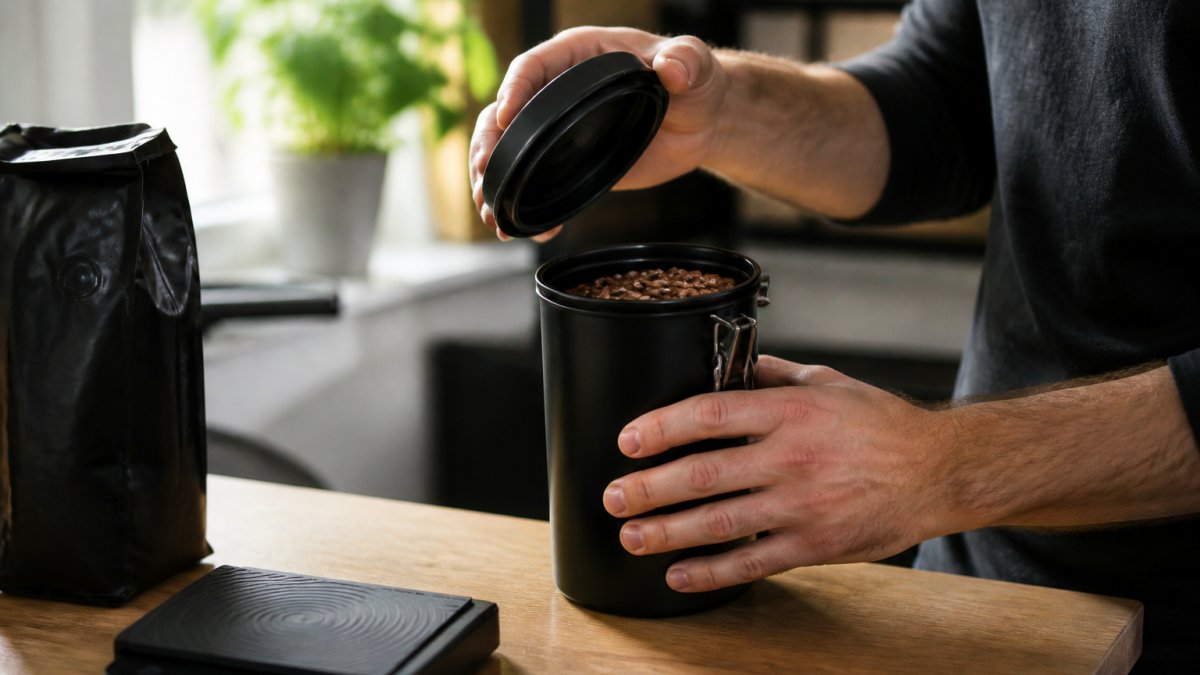
Skip clear containers on open shelves; the light alone costs you flavor. An opaque canister in a dark cabinet does the job better.
Container Material Matters
Container material matters because every material fails differently: glass and plastic on light, thin plastic on oxygen permeability, metal on temperature transfer in the sun, ceramic on weight and breakage. Here is how the common options compare:
| Material | Blocks Light | Air Seal | Thermal Behavior | Best For |
|---|---|---|---|---|
| Stainless steel | Yes | Strong | Conducts heat; keep out of sun | Long-term storage |
| Opaque ceramic | Yes | Strong | Slow to change temperature | Countertop use |
| Clear glass | No | Medium | Slow to change temperature | Short-term use |
| Clear plastic | No | Weak | Fast to change temperature | Not recommended |
| Tinted glass | Partial | Medium | Slow to change temperature | Short-term, dark cabinet |
Why thin plastic is the quiet failure. Many plastic containers are not truly oxygen-barrier.
Why stainless steel is the default pick. Stainless steel blocks all light, does not absorb or release odors, and holds a tight seal against a silicone or rubber gasket.
Why ceramic earns its place on the counter. Opaque ceramic blocks light and changes temperature slowly, making it the best choice if you insist on leaving the container out.
The Role of the One-Way Valve
A one-way valve lets carbon dioxide out and keeps oxygen from getting in. Fresh beans release carbon dioxide for days after roasting, a process called degassing. Without a valve, that gas builds up and can make the bag swell or pop. If you store beans in the original bag, keep that valve clear and never cover it.
The Seal Is the Whole Point
A container is only as good as its gasket. Look for a silicone or rubber gasket that seats against a rigid rim, not a friction-fit lid. Clamp-latch and twist-lock designs hold a seal longer than press-on lids because they apply consistent pressure as the gasket ages. Test any new container before trusting it with a full bag: fill it with beans, seal it, and leave it overnight.
Pantry, Fridge, or Freezer: Where to Keep Coffee Fresh
The pantry wins for daily use: keep coffee in an airtight container in a cool, dark cabinet and it stays fresh through its peak window. The fridge is the worst choice because of condensation and odors.
The freezer works for long-term storage, but only if you do it right. Moisture is the enemy, so the beans must be sealed tight before they go in.
- Pantry: best for coffee you will finish in two to four weeks
- Fridge: avoid it, the moisture and smells ruin beans
- Freezer: best for bulk bags you will not open for a while
Why the Fridge Fails
The fridge fails for two reasons that have nothing to do with cold. First, every time you open the door or container, warm air meets cold beans and its moisture condenses on the bean surface, accelerating the reactions that make coffee stale. Second, coffee oils absorb odors, so a fridge full of leftovers transfers those smells into your beans within days.
The Freezer Burn Myth vs. Reality
Freezer burn does not ruin your coffee, but the flavor suffers.
The condensation trap. The real danger is not the freezer, it is the thaw.
The refreeze rule. Never thaw and refreeze. Each cycle adds a fresh layer of condensation and a fresh dose of oxygen.
What the freezer actually preserves. A properly sealed portion at a steady freezer temperature holds most of its peak flavor for several months, because cold slows oxidation dramatically.
The Pantry Setup That Actually Works
For daily use, the pantry is the right call, but "pantry" is not specific enough. The ideal spot is a closed cabinet away from the stove, oven, dishwasher, and any window, since heat and sunlight accelerate oxidation. A cabinet above the coffee maker sounds convenient but is often the warmest spot in the kitchen. Aim for a steady temperature; fluctuation matters more than the absolute number.
Storing Bulk Bags: Portioning and Long-Term Strategies
Bulk bags need a plan, or the last third tastes stale. The trick is portioning: split the big bag into smaller amounts the day you open it.
- Divide beans into one- to two-week portions
- Seal each portion in an airtight bag with the air pressed out
- Label each with the roast date
- Freeze the portions you will not use soon
- Pull one portion at a time and let it warm to room temperature before opening
This keeps oxygen away from most of your coffee: you open only what you will drink, so the rest stays fresh.
Humidity affects roast levels differently, which most guides skip. Dark roasts have more porous surfaces and soak up moisture faster than light roasts.
Portioning a bulk bag on day one is the single highest-impact habit for keeping coffee fresh. It protects the beans you are not using yet.
Common Mistakes That Ruin Coffee Freshness
Most stale coffee comes from a handful of avoidable mistakes. Fix these and your coffee tastes better within a week.
- Leaving the bag open or loosely folded on the counter
- Storing beans in the fridge
- Using a clear container in direct light
- Buying more coffee than you can drink in a few weeks
- Grinding a whole bag at once
- Keeping beans near the stove or a sunny window
- Ignoring the roast date on the bag
Each one speeds up oxidation, moisture, or heat damage, and all are easy to correct.
For the best results, start with fresh-roasted beans and store them well from day one. That does more for flavor than any brewing gadget.
Great coffee starts with fresh beans, and it stays great only if you store them well. You can choose from single origins, blends, and flavored coffees, and add custom labels for gifts or events.
Frequently Asked Questions
How long does coffee stay fresh after opening the bag?
Whole bean coffee stays at peak flavor for about two weeks after opening, then gradually declines over the next four to six weeks. Pre-ground coffee loses its edge faster, usually within one to two weeks. The roast date on the bag matters more than the best by date, so check that first. To keep coffee fresh longer, transfer it to an airtight container right after opening and store it in a cool, dark spot away from heat and moisture.
Should I store coffee beans in the refrigerator or freezer?
The freezer works well for long-term storage of whole beans, but the refrigerator does not. Fridge temperatures expose coffee to moisture and food odors that it absorbs easily. For daily use, a pantry shelf in an airtight container is the best choice. For bulk bags you won't finish within two weeks, portion the beans into vacuum-sealed bags and freeze them. Let frozen beans come to room temperature before grinding to avoid condensation.
Is it better to store coffee as whole beans or ground?
Whole beans stay fresh significantly longer because their surface area is smaller. Once you grind coffee, the oils and volatile compounds that create aroma are exposed to oxygen immediately. Ground coffee can go stale in as little as a week, while whole beans hold up for several weeks in proper storage. If you buy ground coffee, keep it in the best airtight coffee storage container you can find and use it within two weeks for the best flavor.
Will coffee stay fresh in a Ziploc bag?
Ziploc bags slow staleness but don't stop it. The plastic is porous enough that oxygen passes through over time, and the seal isn't truly airtight. A dedicated airtight container with a one-way valve or vacuum seal performs far better. If a Ziploc is your only option short-term, squeeze out as much air as possible and keep the bag in a dark cabinet. For anything longer than a few days, upgrade your storage.