

Bulk Coffee Delivery for Small Offices: 2026 Guide
Table of Contents
- Quick Comparison: Bulk Coffee Options for Small Offices
- How to Calculate Office Coffee Consumption Before You Order
- Whole Bean vs. Ground: Best Coffee Beans for a Home Office or Breakroom
- Custom Label Coffee for Office Events and Client Gifting
- Equipment Compatibility: K-Cup, Bean-to-Cup, Drip, and Cold Brew
- What Bulk Coffee Delivery Actually Costs a Small Office
- Delivery Cadence, Freshness, and Breakroom Maintenance
- Frequently Asked Questions
Last Updated: September 22, 2026
Quick Comparison: Bulk Coffee Options for Small Offices
Bulk coffee delivery for small offices is a recurring supply arrangement that ships fresh-roasted beans in larger quantities directly to a workplace, usually on a set schedule. At MineYourBusinessCoffee, we roast every order after it's placed, so the bag that lands in your breakroom was never sitting in a warehouse. Below, we'll show you exactly how to size an order, pick the right grind, and avoid the two mistakes that waste the most money.
Before you compare anything, know your monthly cup count and your equipment. Those two numbers decide almost everything else.
| Option | Best For | Format | Starting Price |
|---|---|---|---|
| Sample packs | Testing before committing | 2 oz packs, 6 varieties | $24.99 |
| Best Seller Bundle | Teams wanting variety | 36 oz whole bean | $61.99 |
| Max Caf Bundle | High-volume caffeine needs | 4 lb whole bean | $95.00 |
| Single Origin Espresso Bundle | Espresso drinkers | 3 origins | $81.00 |
How to Calculate Office Coffee Consumption Before You Order
The fastest way to calculate office coffee consumption is to multiply your daily drinkers by cups per day, then multiply by your delivery cadence. A reliable rule most office managers use is 2 to 3 cups per daily coffee drinker. But the formula only works if you feed it honest inputs, and the two inputs that get fudged most often are headcount and brew strength.

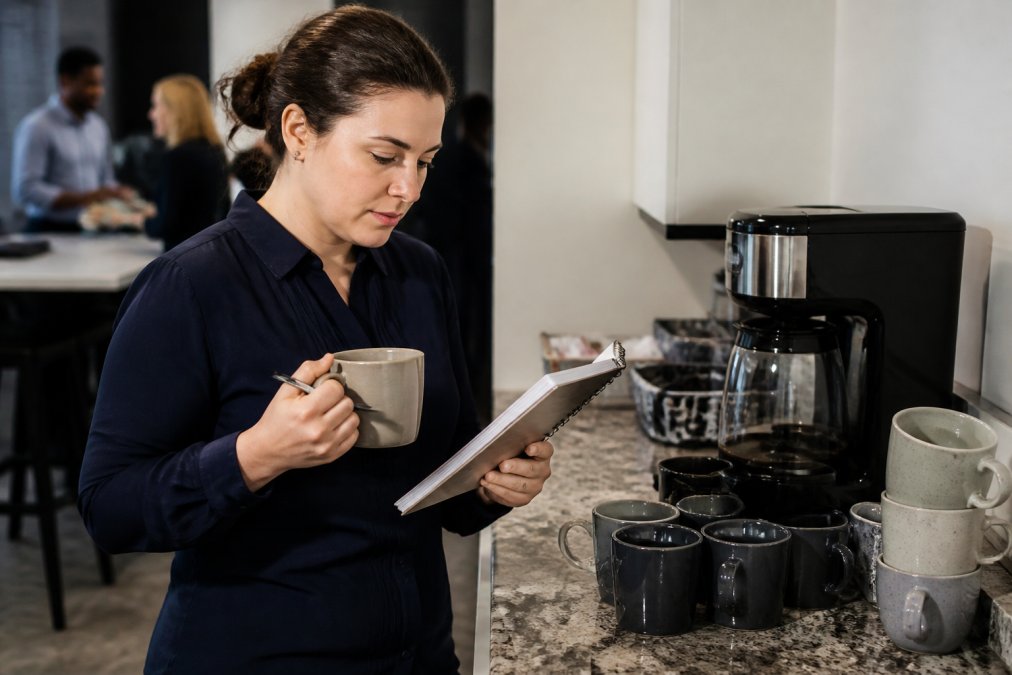
Start with a headcount, not a guess. Ask who actually drinks coffee at work, since that number is usually smaller than total staff. Then separate your drinkers into two buckets: daily drinkers and occasional drinkers.
The Weekly Cup Math for Teams of 5 to 40
Use this formula:
Daily cups = daily coffee drinkers x average cups per person
| Total Staff | Estimated Daily Drinkers | Daily Cups | Weekly Cups | 12 oz Bags per Week |
|---|---|---|---|---|
| 5 | 3 | 6 | 30 | 1 |
| 10 | 6 | 12 | 60 | 2 |
| 15 | 9 | 18 | 90 | 3 |
| 20 | 12 | 24 | 120 | 4 |
| 30 | 18 | 36 | 180 | 6 |
| 40 | 24 | 48 | 240 | 8 |
- Brew strength. A stronger brew uses more grounds per cup. If your team likes it dark, add 15 to 20 percent to your bag count.
- Waste. Coffee left sitting in the pot past 30 minutes gets poured out. Offices that brew in small batches waste less than offices that brew a full pot every hour.
- Seasonality. Cold months and busy project cycles push consumption up. Many offices see a 10 to 15 percent bump in winter.
A Simple Way to Right-Size Without Overthinking It
If you do not want to run the math every month, use a two-week calibration period. Order your calculated amount, then track how many bags you actually finish versus how many you throw away. After two weeks you will know whether to adjust up or down by one bag per delivery. That single adjustment is usually enough to eliminate both shortages and stale surplus.
Whole Bean vs. Ground: Best Coffee Beans for a Home Office or Breakroom
Whole bean coffee stays fresh longer than pre-ground because the oils and aromatics stay locked inside the bean until you grind it. If your office has a grinder, whole bean is the better buy. If it doesn't, order ground and accept a shorter window.
For grind selection, match the machine:
- Drip: medium grind
- Bean-to-cup: medium to medium-fine
- Espresso: fine grind
- Cold brew: coarse grind
- K-cup: no grind choice, but freshness still matters
Custom Label Coffee for Office Events and Client Gifting
Custom label coffee is the strongest option for office events and client gifting because the packaging carries your message. Personalized bags work for onboarding kits, client appreciation boxes, and event favors.
For planning, work backward from your event date.
Equipment Compatibility: K-Cup, Bean-to-Cup, Drip, and Cold Brew
Equipment compatibility determines which format you can actually use, so check the machine before you check the price. A bean-to-cup machine needs whole bean. A standard drip brewer accepts either. A K-cup machine locks you into pods.
Here's how the common setups compare:
| Machine | Coffee Format | Grind Needed | Best Volume | Typical Maintenance Cadence |
|---|---|---|---|---|
| Drip brewer | Whole bean or ground | Medium | 10+ cups/day | Rinse daily, deep clean monthly |
| Bean-to-cup | Whole bean | Medium to medium-fine | 15+ cups/day | Descale every 2-3 months |
| Espresso machine | Whole bean or ground | Fine | 5-10 shots/day | Backflush weekly, descale quarterly |
| Cold brew setup | Whole bean or ground | Coarse | Batch brewing | Clean carafe and filter after each batch |
| K-cup machine | Pods | Not applicable | Low to moderate | Descale every 3-6 months |
Why Equipment Maintenance Belongs in Your Coffee Budget
Most coffee guides stop at the compatibility table. That is a mistake, because the machine is the part of the program that quietly determines whether your beans taste good or bitter.
A few maintenance habits that pay off:
- Rinse the carafe and basket daily. Old oils are the fastest way to make good coffee taste stale.
- Descale on a schedule tied to water hardness. Hard water deposits scale faster; if your tap water leaves spots on a glass, your machine needs descaling more often.
- Replace filters on time. Carbon and water filters lose effectiveness long before they stop working, and a spent filter lets chlorine and minerals through.
- Keep a small cleaning kit in the breakroom. The Coffee Maker Cleaner and Descaler Tablets run $19.99 for a 12-pack, which covers about a year of monthly cleaning. Buildup inside the machine is a common reason good coffee starts tasting bitter.
Matching Equipment to Your Coffee Program
The machine and the coffee order should be chosen together, not separately. If you are buying whole bean for a bean-to-cup machine, confirm the grinder can handle the roast level you prefer. If you are running a drip brewer, medium grind is the safe default. If you are locked into a K-cup machine, freshness still matters.
What Bulk Coffee Delivery Actually Costs a Small Office
Bulk coffee delivery costs a small office roughly the price of the beans plus any equipment upkeep.
Is Office Coffee Tax Deductible?
Office coffee is generally treated as a deductible business expense when it's provided for employees on the premises, but the rules depend on your situation. The IRS publishes guidance on ordinary and necessary business expenses.
Delivery Cadence, Freshness, and Breakroom Maintenance
Delivery cadence should match your consumption rate, not a fixed calendar. A 10-person office usually needs weekly or biweekly delivery. A 40-person office often needs twice a week.
Frequently Asked Questions
How much coffee should I order for a small office?
Start with a consumption estimate: assume 2 to 3 cups per person per day, then multiply by your headcount and working days in the delivery cycle. A 20-person office drinking 2 cups daily needs roughly 40 cups a day. Order in weekly or biweekly increments and adjust after the first month based on what actually disappears from the breakroom.
Is it cheaper to buy coffee in bulk for the office?
Bulk pricing lowers your per-pound cost because roasters pass along savings on larger orders and recurring shipments. The bigger savings come from matching your order size to your real consumption, so you are not throwing out stale coffee or paying rush shipping on emergency orders.
How do I keep bulk coffee fresh in an office environment?
Buy whole bean when you can and grind right before brewing, since ground coffee loses its aroma faster. Store beans in an airtight container away from light, heat, and moisture, not in the fridge. Order smaller quantities more often rather than a huge shipment once a quarter, and check roast dates on arrival.
What equipment do I need for office bulk coffee service?
Most small offices do well with a drip brewer for volume, a grinder if you buy whole bean, and an espresso or bean-to-cup machine if people want lattes. Whatever you run, clean it monthly: mineral scale and coffee oils build up inside and turn good beans bitter. Descaler tablets work with single-cup, drip, and espresso machines.
How often should office coffee be delivered?
Weekly delivery suits offices of 20 or more where consumption is steady. Teams under 10 often do fine with biweekly or monthly shipments. Track how long a shipment lasts, then set your delivery cadence slightly shorter than that so you never run out midweek.
Running a small office coffee program comes down to two things: knowing your cup count and buying from a roaster who ships fresh. MineYourBusinessCoffee roasts to order, offers sample packs, bundles, and custom-labeled bags for events and client gifts, and supports the whole program with cleaning supplies like descaler tablets and citric acid. Get started with MineYourBusinessCoffee and give your team a breakroom worth walking to.