

Benefits of Small Batch Roasted Coffee: Freshness Guide
Table of Contents
- Why Small Batch Coffee Tastes Different
- How to Tell if Coffee Beans Are Fresh
- The Coffee Degassing Process and Why It Matters
- The Best Way to Store Roasted Coffee Beans
- Small Batch vs. Commercial Roasting: A Side-by-Side Look
- How Small Batch Roasting Reduces Waste and Supports Farmers
- Choosing the Right Small Batch Coffee for Your Office or Home
- Conclusion
- Frequently Asked Questions
Last Updated: September 19, 2026
Why Small Batch Coffee Tastes Different
One of the benefits of small batch roasted coffee is more consistent flavor, because each batch receives individual attention from the roastmaster. According to Specialty Coffee Association's roasting standards, smaller batches allow for tighter control over roast profile development, which directly impacts flavor clarity in the final cup.
At MineYourBusinessCoffee, we roast every order fresh rather than stocking shelves with coffee that sits for weeks. The difference shows up in the cup: brighter acidity, clearer origin notes, and none of the flat, papery taste that comes from beans roasted months ago.
The benefits of small batch roasted coffee start with how heat moves through the beans. In a small drum roaster, the roastmaster adjusts airflow and temperature in real time. A 12-kilogram batch responds differently than a 120-kilogram one. With less thermal mass to manage, small batches hit target roast levels more precisely, which means fewer scorched beans and more even development.
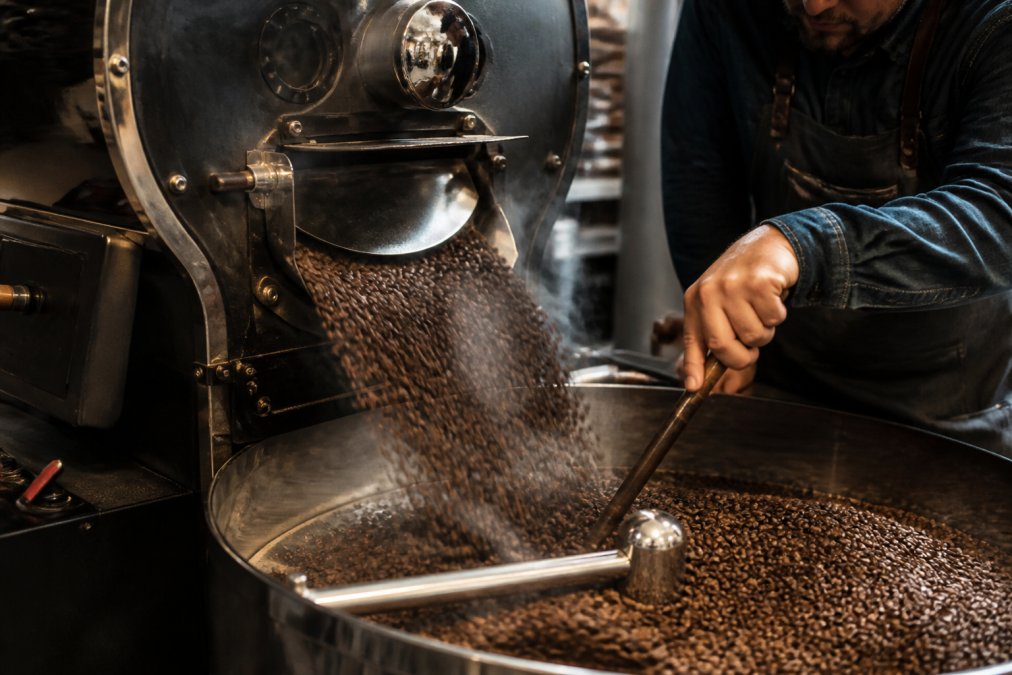
That precision matters because coffee is agricultural. Bean density, moisture content, and size vary from harvest to harvest. A roastmaster working with small batches can adjust the roasting curve to match each lot.
The Chemistry Behind the Cup
What actually happens inside the bean during a small batch roast comes down to two reactions: the Maillard reaction and caramelization. The Maillard reaction is a browning reaction between amino acids and reducing sugars that begins around 300°F and produces hundreds of aroma and flavor compounds. Caramelization follows as sugars break down under sustained heat, contributing sweetness and body. In a small batch, the roastmaster can stretch or compress the time spent in each phase, a concept roasters call development time ratio, or DTR.
How to Tell if Coffee Beans Are Fresh
Fresh coffee beans have a visible roast date on the bag, smell intensely aromatic when opened, and feel slightly oily or matte depending on roast level. If the bag lists only a "best by" date, you have no way to know when the coffee was actually roasted.
Here's what to check before you buy:
- Roast date, not expiration date. Coffee is best within 2-4 weeks of roasting for drip and pour-over, and 1-2 weeks for espresso.
- One-way valve on the bag. This lets carbon dioxide escape without letting oxygen in.
- Whole beans over pre-ground. Grinding accelerates staleness dramatically.
- Aroma test. Fresh beans smell sweet and complex. Stale beans smell like cardboard or nothing at all.
A Sensory Evaluation Guide: How to Taste the Difference Yourself
Most guides stop at the checklist. The real test is in the cup. You can verify freshness and small-batch quality at home using a simplified version of the cupping protocol the Specialty Coffee Association uses for professional grading. You don't need a lab, just a few tools and about 20 minutes.
What you'll need:
- Two coffees to compare (ideally one small-batch, one supermarket bag)
- A kitchen scale accurate to 0.1 grams
- A burr grinder
- Two identical cups or bowls
- A spoon and a timer
- Water just off boil, around 200°F
The method:
- Weigh and grind. Use a 1:16 ratio, about 8.25 grams of coffee to 130 grams of water per cup. Grind medium-coarse, like sea salt.
- Smell the dry grounds. This is called the dry fragrance. Fresh small-batch coffee typically shows sweet, fruity, or floral notes. Stale coffee smells flat or papery.
- Pour and bloom. Add hot water and start your timer. At 1 minute, break the crust with your spoon and smell again, this is the wet aroma. Small-batch coffee often releases a more layered, complex smell here.
- Slurp at 8 minutes. Once the coffee cools to around 160°F, take a spoonful and slurp it loudly. Slurping aerates the liquid and spreads it across your palate, which is how professional cuppers evaluate acidity, body, sweetness, and aftertaste.
- Score four attributes. Rate each coffee 1-10 on sweetness, acidity, body, and finish. Small-batch coffee usually wins on sweetness and finish; stale coffee tends to taste hollow or ashy.
What to look for:
- Sweetness: Small-batch coffee should taste sweet without added sugar. If you need cream and sugar to make it drinkable, that's a sign of stale or poorly developed beans.
- Acidity: Not sourness, think of the brightness in a ripe apple. Fresh coffee has lively, structured acidity. Stale coffee tastes flat.
- Body: The weight on your tongue. Small-batch coffee often has a syrupy or creamy texture because the roastmaster developed the bean evenly.
- Finish: How long the flavor lingers. A clean, sweet finish that fades slowly is a hallmark of fresh, well-roasted coffee. A short, bitter, or papery finish signals staleness.
The Coffee Degassing Process and Why It Matters
- Light roasts: Degas faster, often ready in 3-5 days
- Medium roasts: Peak flavor around 5-10 days post-roast
- Dark roasts: Degas quickly but oxidize faster, best within 2 weeks
This is why roast date matters more than almost any other factor. Coffee that's been sitting for two months has already completed degassing and started oxidizing. The window for peak flavor has closed.
The Best Way to Store Roasted Coffee Beans
The best way to store roasted coffee beans is in an opaque, airtight container at room temperature, away from light, heat, and moisture. Skip the refrigerator and freezer for daily-use coffee.
Store coffee properly by following these rules:
- Keep beans in the original bag with the valve, or transfer to a vacuum-sealed canister
- Store in a cool, dark cabinet, not on top of the coffee maker
- Buy only what you'll drink in 2-3 weeks
- Grind right before brewing
- Never store coffee near spices, onions, or anything strongly scented
Small Batch vs. Commercial Roasting: A Side-by-Side Look
Small batch and commercial roasting differ mainly in batch size, control, and how quickly roasted coffee reaches the customer. Small batch operations roast in quantities typically under 30 kilograms per batch, while commercial roasters run batches measured in hundreds of kilograms.
| Factor | Small Batch Roasting | Commercial Roasting |
|---|---|---|
| Batch size | Under 30 kg | 100+ kg |
| Roast profile control | Adjusted per lot | Fixed profiles |
| Time from roast to ship | Days | Weeks to months |
| Flavor consistency | High, varies by lot | Uniform, standardized |
| Origin character | Preserved | Often blended out |
| Cost per pound | Higher | Lower |
How Small Batch Roasting Reduces Waste and Supports Farmers
Small batch roasting reduces waste because roasters produce to demand rather than forecasting months ahead. Overproduction is a persistent problem in coffee: roasted beans have a limited shelf life, and unsold inventory gets discounted, dumped, or sold stale.
Choosing the Right Small Batch Coffee for Your Office or Home
For gifting or events, custom-labeled bags solve a different problem. MineYourBusinessCoffee roasts to order and lets you add custom labels with messages or images, which turns a coffee gift into something people actually keep on their desk.
Conclusion
The challenge with small batch coffee is that freshness has a deadline. Every day between roasting and brewing narrows the window where flavor peaks, and most retail coffee has already missed it. MineYourBusinessCoffee roasts to order, so your coffee ships within days of roasting rather than months. Members of the Founders Club get a lifetime discount and free shipping, and every order can include custom labels for gifts, events, or your own morning motivation.
Frequently Asked Questions
Is small batch coffee actually better than mass-produced coffee?
Small batch coffee is roasted in smaller quantities, which gives the roastmaster more control over heat and airflow. That precision means each batch hits its ideal roast profile. Mass-produced coffee is roasted in huge volumes where consistency across thousands of pounds is harder to maintain. The result is that small batch coffee often delivers better flavor clarity, a more distinct aroma profile, and a fresher cup because it is roasted closer to when you buy it.
How long should you wait to drink coffee after it has been roasted?
Most roasters suggest waiting 3 to 7 days after the roast date for drip or pour-over, and 7 to 14 days for espresso. This rest period lets the coffee degassing process finish releasing carbon dioxide. If you brew too soon, the CO2 interferes with water extraction and you get an uneven, sometimes sour cup. After that window, flavor peaks for about two to three weeks if the beans are stored properly.
How can you tell if coffee beans are truly fresh?
Start with the roast date, not the best-by date. Fresh beans have a visible sheen from oils that surface during roasting, though dark roasts show more oil than light ones. When you open the bag, you should smell a strong, complex aroma, not a flat or papery scent. Another test: drop a bean in hot water. Fresh beans release noticeable bubbles from trapped CO2. If nothing happens, the coffee has already degassed and lost much of its character.
Does small batch roasting affect the health benefits of coffee?
The roasting method affects how many beneficial compounds survive the process. Coffee contains chlorogenic acids and other antioxidants that degrade with prolonged, high-heat roasting. Small batch roasting uses shorter, more controlled roast profiles, which can preserve more of those compounds. The difference is not dramatic, but a medium roast from a small batch roaster likely retains more antioxidants than an over-roasted commercial batch. Freshness also matters since oxidation reduces those compounds over time.